Technology

    What Is Quantum Computing and How Will It Change Our World?

    December 20, 20258 min read12.4K views

    Dr. Sarah Chen

    47 articles

    Introduction to Quantum Computing

    Quantum computing represents one of the most significant technological leaps of our time. Unlike classical computers that process information in binary bits (0s and 1s), quantum computers leverage the bizarre properties of quantum mechanics to perform calculations in ways that seem almost magical.

    Imagine a computer that could solve in minutes what would take today's most powerful supercomputers thousands of years. That's the promise of quantum computing, and it's closer to reality than you might think.

    "Quantum computing is not just a faster version of classical computing—it's an entirely new paradigm that will transform how we approach problems in medicine, cryptography, and artificial intelligence."

    How Quantum Computers Work

    At the heart of quantum computing are three key principles from quantum mechanics: superposition, entanglement, and interference. These phenomena, which govern the behavior of particles at the subatomic level, enable quantum computers to process vast amounts of information simultaneously.
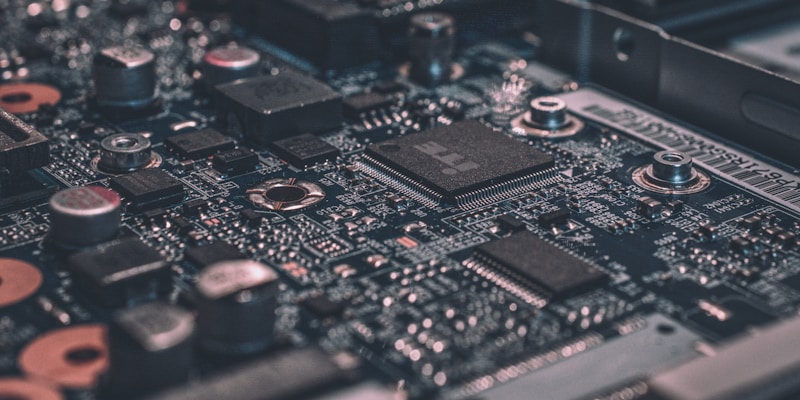
    Classical computers perform calculations sequentially, one step at a time. Quantum computers, however, can explore multiple solutions simultaneously, making them exponentially more powerful for certain types of problems.

    Understanding Qubits

    While classical bits can only be in one of two states (0 or 1), qubits can exist in a superposition of both states simultaneously. This is what gives quantum computers their remarkable power.

    Classical Bit

    Like a light switch—either ON (1) or OFF (0). Simple, reliable, but limited.

    Quantum Bit (Qubit)

    Can be 0, 1, or both at the same time—enabling parallel processing of possibilities.

    Think of it this way: if you’re searching for a specific book in a library, a classical computer would check each book one by one. A quantum computer, using superposition, could check all the books simultaneously.

    Real-World Applications

    Quantum computing isn’t just theoretical—it’s already being applied to solve real-world problems across multiple industries:
    1

    Drug Discovery

    Simulating molecular interactions to develop new medicines faster and more accurately.

    2

    Financial Modeling

    Optimizing investment portfolios and detecting fraud patterns in real-time.

    3

    Climate Science

    Running complex climate models to better predict and mitigate climate change.

    4

    Cryptography

    Developing unbreakable encryption methods while also challenging existing security.

    Current Challenges

    Despite their potential, quantum computers face significant hurdles. Qubits are extremely fragile and require temperatures colder than outer space to function. Even tiny vibrations or temperature changes can cause errors.

    Current quantum computers are also limited in the number of qubits they can maintain. While we've achieved systems with hundreds of qubits, experts believe we'll need millions to solve the most complex real-world problems.

    The Future of Quantum Computing

    The next decade promises remarkable advances. Major tech companies and governments are investing billions in quantum research. By 2030, experts predict we’ll see quantum computers capable of solving problems that are currently impossible.
    While quantum computers won’t replace classical computers for everyday tasks, they will become essential tools for tackling humanity’s biggest challenges—from curing diseases to understanding the universe itself.

    Key Takeaway

    Quantum computing isn't science fiction—it's rapidly becoming science fact. Understanding these technologies today prepares us for a tomorrow that will be fundamentally different from anything we've known.

    Discussion

    5 comments

    ?

    Sign in to join the discussion

    Alex Thompson2 hours ago
    This is such a comprehensive breakdown of quantum computing! I finally understand the difference between qubits and classical bits. The analogy about the coin spinning was particularly helpful.
    Dr. Sarah Chen1 hour ago

    Thank you, Alex! I'm glad the coin analogy helped. Quantum superposition can be tricky to visualize, but everyday metaphors make it more approachable.


    Maria Garcia5 hours ago
    What are the main challenges in scaling quantum computers for everyday use? I’ve heard decoherence is a major issue but would love more details on the engineering challenges.
    James Wilson1 day ago
    I work in cybersecurity and the implications of quantum computing for encryption are both exciting and concerning. The section on quantum cryptography was particularly relevant. Great read!
    Emily Foster20 hours ago

    Completely agree! Post-quantum cryptography is going to be crucial. Are there any resources you'd recommend for learning more about this transition?

    Dr. Sarah Chen

    Quantum physicist and science writer with 15 years of experience making complex topics accessible to everyone.

    47

    Articles

    12.3K

    Followers